

No items found in your cart!
No items found in your cart!
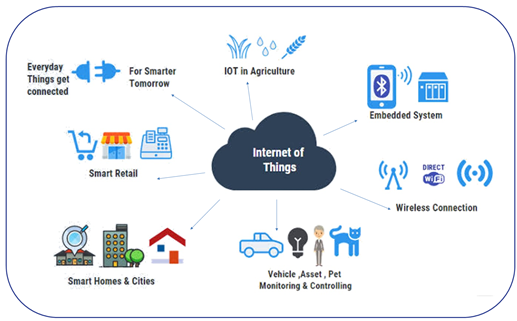
: How Connected Devices Are Transforming Homes, Cities and Industries) you definitely can not afford to miss this. READ HERE https://www.hub.goglowonline.com/view-post.php?post_id=115, Thanks for always taking out time to read through our blog posts @ Goglow Hub! We are Happy that you enjoy it!&image=<img src='https://www.hub.goglowonline.com/upload/1793782421iot1.png'/>) |
|
|
|
Technology is evolving rapidly, and the way we interact with everyday devices is changing. Imagine switching on your home lights with your smartphone, monitoring your health with a smartwatch, tracking farm conditions remotely or managing industrial machines without being physically present.
These innovations are made possible by a technology known as the Internet of Things (IoT).
The Internet of Things is one of the major developments shaping the future of Information and Communication Technology (ICT). It is connecting everyday objects to the internet, allowing them to collect information, communicate and perform tasks with minimal human intervention.
At GOGLOW HUB, we believe that understanding emerging technologies is an important step towards becoming digitally informed and prepared for the future. So, let's explore what IoT means, how it works and how it is transforming different sectors.
The Internet of Things (IoT) refers to a network of physical devices connected to the internet that use sensors, software and other technologies to collect, share and exchange data.
These devices include smartphones, smart televisions, security cameras, refrigerators, vehicles, medical equipment, agricultural sensors and industrial machines.
For example, a smart security camera can detect movement around your home and send an alert directly to your smartphone. Similarly, a smartwatch can monitor your heart rate and record your daily physical activities.
Simply put, IoT allows everyday objects to become smarter by connecting them to the internet.
IoT is changing how people manage their homes. With smart home technology, homeowners can control different household devices remotely using smartphones and other connected systems.
Some examples include:
Smart lighting systems that automatically switch lights on or off.
Smart security cameras that allow remote home monitoring.
Smart door locks that provide digital access control.
Smart televisions and appliances that connect to the internet.
Smart air conditioners that automatically regulate room temperatures.
Imagine leaving your house and being able to check your security cameras or switch off your lights using your smartphone. This is the convenience IoT provides.
Healthcare is another sector benefiting from connected devices. IoT makes it possible for healthcare professionals to monitor patients and access important health information remotely.
Examples include smartwatches, connected blood pressure monitors, glucose monitoring devices and remote patient monitoring systems.
These technologies can help patients monitor important health indicators while allowing healthcare professionals to receive relevant information without requiring every patient to visit a hospital physically.
Agriculture is becoming more technology-driven through the introduction of smart farming solutions.
Farmers can use IoT devices to monitor soil moisture, weather conditions, temperature and crop environments.
For example, soil moisture sensors can help determine when crops need water. Some connected irrigation systems can automatically supply water when the soil becomes too dry.
This helps farmers manage water resources, monitor farm conditions and improve agricultural productivity.
Manufacturing companies are using connected machines and sensors to improve production processes.
Through Industrial IoT (IIoT), machines can communicate with monitoring systems and provide real-time information about their performance.
Some applications include:
Monitoring machine performance.
Detecting equipment problems before breakdowns occur.
Tracking production activities.
Managing factory inventory.
Improving workplace safety.
For example, sensors installed on factory equipment can detect unusual vibrations or temperature changes and notify technicians when maintenance is required.
This helps reduce unexpected breakdowns and improve operational efficiency.
IoT is also improving how businesses transport products and manage deliveries.
With GPS tracking and connected sensors, companies can monitor the location of delivery vehicles, track shipments and monitor the condition of goods during transportation.
For instance, companies transporting food, vaccines and other temperature-sensitive products can use IoT sensors to monitor storage conditions throughout the delivery process.
This makes transportation and supply chain management more efficient.
Cities around the world are adopting connected technologies to improve public services and infrastructure.
Some examples of smart city applications include:
Smart traffic lights that help manage traffic flow.
Smart streetlights that adjust their brightness automatically.
Waste bins with sensors that notify collection teams when they are full.
Environmental sensors that monitor air quality.
Smart water systems that help detect leaks.
These technologies can help governments manage resources, improve public services and create more efficient urban environments.
The growing adoption of IoT provides several advantages to individuals, businesses and governments.
1. Convenience: People can control and monitor connected devices remotely.
2. Automation: Devices can perform certain tasks automatically without constant human involvement.
3. Improved Efficiency: Businesses can monitor operations and manage resources more effectively.
4. Cost Reduction: Predictive maintenance and automation can help reduce operational expenses.
5. Better Decision-Making: Information collected from connected devices supports informed decisions.
6. Real-Time Monitoring: Users can receive updates and notifications as activities happen.
Although IoT offers many opportunities, it also comes with challenges that must be addressed.
Cybersecurity: Connected devices can be vulnerable to hacking and unauthorised access.
Privacy: Some devices collect personal and sensitive information.
Internet Connectivity: Many IoT solutions depend on stable internet connections.
Cost: Installing and maintaining smart devices can be expensive.
Compatibility: Devices from different manufacturers may not always work seamlessly together.
This is why cybersecurity, data protection and responsible technology usage are important in the development and application of IoT.
The future of IoT will become even more exciting as it combines with other emerging technologies such as Artificial Intelligence (AI), cloud computing, 5G networks and data analytics.
Imagine smart systems that can analyse information, identify problems and automatically recommend solutions.
From intelligent healthcare systems to automated factories and smart agricultural solutions, these developments will create new opportunities for technology professionals, businesses and innovators.
As these technologies continue to develop, there will be an increasing need for people with digital knowledge, programming skills, networking expertise, cybersecurity knowledge and data analysis capabilities.
Technology is no longer limited to computer systems and smartphones. It is becoming part of almost every industry, from education and healthcare to agriculture, transportation and business.
Understanding technologies such as IoT gives you an opportunity to appreciate how the digital world works and discover new areas where you can build valuable skills.
At GOGLOW HUB, we encourage individuals, students and aspiring technology professionals to explore the world of ICT, develop practical digital skills and stay informed about technological advancements.
Whether you are interested in programming, software development, data analysis, cybersecurity, networking or other technology-related fields, continuous learning is essential in today's digital world.
The Internet of Things is transforming how we live, work and interact with our environment. From controlling household appliances to monitoring agricultural activities and managing smart cities, connected devices are making technology more accessible and useful.
As the world becomes increasingly connected, understanding IoT and other emerging technologies will be an important advantage for anyone looking to participate in the digital future.
The future belongs to those who understand technology and know how to use it. Start building your digital knowledge today with GOGLOW HUB.
Ready to develop your ICT skills?
Visit https://hub.goglowonline.com to explore training opportunities and take your first step towards becoming digitally skilled.
GOGLOW HUB - ..changing Africa using Technology.


 Courses
 Graphics Design
 Web Development
 Mobile App Development
 System Application Development
 Computer Appreciation
 Architectural Design
 UI/UX Design
 Programming
 Software Development
 Computer Repairs
 Solar Panel Installation
 CCTV Installation
 Digital Photograpghy
 Digital Marketing
 Data Analytics
 Database Management
 Ethical Hacking
 Blockchain Development
 Jamb CBT Practice
 TOEFL Training
 IELTS Training